Friday, December 16, 2016

The Souls behind the Christmas Classics

By Mary Claire Kendall

Every year as we celebrate the birth of Christ, one time-honored tradition is that of sitting in the warmth of our homes and enjoying classic Hollywood films with friends and family, if not alone, as we savor the days of Christmas.

James Cagney presenting Gary Cooper Best Actor Oscar at 1942
Academy Awards for title role in  Sergeant York (1941)


These cinematic treasures help us appreciate the momentous reality of Christ becoming man because they exemplify, in many respects, the goodness and virtue he embodied, and which a Christian—“a bearer of Christ”—is called to live. Often this happens through characters such as George Bailey and Ebenezer Scrooge, in, respectively, It’s a Wonderful Life (1945) and A Christmas Carol, produced numerous times, including the 1938 and 1971 classics, starring Reginald Owens and Albert Finney, who exemplify our weak human nature and how, with grace, it is beautifully overcome.

These Christmas films feature legends of Hollywood—many of whom I write about in Oasis: Conversion Stories of Hollywood Legends, including: 
  • Gary Cooper, who starred in Frank Capra’s classic “Meet John Doe”(1941), about a quintessential common man (Cooper) up against powerful state forces seeking to undermine his humanity, and that of all common men everywhere, which he vows to dramatize on Christmas Day;
  • Mary Astor, who starred in the turn of the 20th century Vincent Minelli masterpiece“Meet Me in St. Louis,” set before and during the 1904 World’s Fair in St. Louis, which exemplifies the strong family bonds that typified American families then;
  • John Wayne, who starred in the poignant classic, “Three Godfathers”(1948; also made in 1916 and 1936)about three outlaws on the lam, who discovering a dying woman and her newborn baby in the desert, vow to save the baby;
  • Betty Hutton, who starred in “The Miracle of Morgan Creek” (1944), a Preston Sturges World War II comedy classic, with an amazing twist;
  • Patricia Neal, who starred in “The Waltons” (1971), another film about maintaining strong family bonds during tough times, in this case, during the Depression era;
  • Lana Turner, who starred in “Imitation of Life,” the 1959 remake of the classic 1934 film about cleansing the stain of racism;
  • Bob Hope, who starred in “The Lemon Drop Kid,” a hit comedy where the “Kid” (Hope) pressed to repay $10,000 to an irate gangster, celebrates the spirit of Christmas and people willing to part with their money!

It’s easy enough to take these stars and the joy they bring into our lives for granted. But did you ever consider the blood, sweat and tears that went into their performances? What my friend Harry Flynn, formerly Bob Hope’s publicist, calls “the soul behind the billboard.”

As Gary Cooper famously said, “No player ever rises to prominence solely on talent. They’re molded by forces other than themselves. They should remember this—and at least twice a week drop to their knees and thank Providence for elevating them from cow ranches, dime store ribbon counters and bookkeeping desks.”

God was there, ensuring they would play their role.

And, he was there later, offering his grace and healing when they stumbled along the way. For the fortunate “all-star twelve” I write about—including Alfred Hitchcock, Cooper, Hope, Astor, Wayne, Ann Sothern, Jane Wyman, Susan Hayward, Turner, Hutton, Ann Miller, and Patricia Neal—they embraced the healing love and forgiveness as they did battle with their demons.

For some, it was a long journey. Others glimpsed their need for God early on. It was not always an easy road. The stories in Oasis are laced with great suffering and tragedy as these legends made their way out of the wilderness of human frailty, and ultimately arrived safely in God’s loving arms.

Originally published in Townhall.com.


***

Oasis was published in Spain in November 2016 under the title, También Dios pasa por Hollywood.

Wednesday, June 22, 2016

Happy Birthday, Billy Wilder!


Happy Birthday 
Billy Wilder, one of Hollywood’s most talented all-time writers/directors and winner of six Oscars. 

After fleeing the Nazis in 1933 at age 27, he came to America and made such classic films as “Sunset Boulevard,” “The Apartment,” and “Some Like It Hot,”  ranked by AFI in June 2000 as the #1 comedy of all time
Jack Lemon, who starred in many of his films, spoke fondly of the filmmaker.

Billy would have been 110 today!

Mary Claire Kendall is the author of Oasis: Conversion Stories of Hollywood Legends


Wednesday, June 15, 2016

Hollywood Rejects Wisdom at Its Own Peril*

By Mary Claire Kendall

Mike Dann, legendary programmer for television with a far-reaching impact on American life and culture, whose counsel and friendship I prized, recently left us.

Dann helped create such NBC hits as “Meet the Press,” “Today” and “Tonight” and later, at CBS, successfully shepherded “The Dick Van Dyke Show,” “The Beverly Hillbillies,” “The Carol Burnett Show,” “The Mary Tyler Moore Show,” and, on the news side, “60 Minutes,” among many other hits.
With Paul & Deirdre Lee at Governor's Ball following 86th Oscars.  
It was while working with Paul, most recently ABC Entertainment head 
(2010-2016),  that I met and worked with Mike Dann.
While he sometimes missed the boat—for instance, initially failing to appreciate “Gilligan’s Island”—more often than not, he knew a gem when he saw it and knew just when to schedule it.
Then, new CBS president Robert D. Wood decided, in 1969, to gamble on riskier shows appealing to the younger set. The youth were riding high in the wake of the Summer of Love in Haight-Ashbury and its sequel, Woodstock.
“Make love not war” was the mantra, and “sex, drugs and rock & roll” ruled.
So, Wood ordered Mike to cancel “The Red Skeleton Show,” “The Jackie Gleason Show,” “Green Acres,” “Hee Haw,” and other demographically broad hits which he had catapulted to success.
Later surveying the ruins, Mike decided to exit—but not before acquiring the mega-hit “All in the Family,” epitomizing CBS’s post-“Hillbillies” era.

Hollywood Rejects Experience

As I reflected on Mike’s legacy and how his career took a radical turn when the suits responded to what they deemed the exigencies of the moment, I could not help thinking of the recent “out with the old, in with the new” wave in Hollywood.
The diversity dust-up surrounding this year’s Oscars precipitated big changes at the Academy of Motion Picture Arts and Sciences with lightning speed—changes that sought to respond to popular pressures without regard for the larger consequences.

Older, wiser members of the Academy were disenfranchised as part of this rapid, yet misguided effort, to redress, by ‘widening its nets,’ the Academy’s collective failure this year to nominate not even one African American star for an Oscar. (Many, like George Clooney, rightly note the problem lies with the pipeline.)  If these members are inactive for 10 years and do not meet certain criteria, their status will be changed to “emeritus” with all the privileges of Academy membership—except Oscar voting.
Not so fast, says Academy member Mother Dolores Hart, known for “Wild Is the Wind” (1957), “King Creole” (1958) and Oscar-nominated “God Is The Bigger Elvis” (2012).
These older members, she said, are the “wisdom figures,” she told me. And, when the Academy loses them it “is going to destroy something of the essence of how people look at” it and “the quality” with which they associate it, Mother Dolores said.
“It’s always been the star in the sky” among all the guilds. “And, I think they are going to lose that,” she said.

The 1st Annual Academy Awards held on May 16, 1929 in the Blossom Room of the Roosevelt Hotel in Hollywood

‘Precious’ Contributors

Not all of the lifetime members will be disenfranchised, and irrespective of their status, some like Oscar-winner Olivia de Havilland (“Gone with the Wind” (1939), “The Heiress” (1949)) do not choose to vote. But, many will lose voting status. This “hurts” said Mother Dolores, not only for herself but for the sake of her Academy friends, who, she said, are “precious and have such value.”
Mother Dolores was brought out of retirement in 1998 by Karl Malden, then president of the Academy. In 1963, at the end of the “Come Fly with Me” press junket – just as sex, drugs and rock and roll were revving up – her limousine’s final destination was the Abbey of Regina Laudis in Bethlehem, Conn., where she has lived in consecrated life for 53 years.
“We want to hear what you say and what you experience, because you have experienced it from a different place,” she said Malden told her when he called.
“I think they should rethink this,” said Mother Dolores of the new Oscar rules, “and see if there’s something else they can offer.”
Surely, they will come up with a solution that keeps the Academy glistening. After all, wisdom figures like Mother Dolores (and Mike Dann) know what they’re talking about.

Mary Claire Kendall is the author of “Oasis: Conversion Stories of Hollywood Legends,” which Mother Dolores Hart wrote the foreword to.  Another version of this article, occasioned by the 49th, 37th and 55th anniversaries of the deaths of, respectively, Spencer Tracy, John Wayne and Gary Cooper, was recently published in Mary Claire’s “Legends of Hollywood” blog.

***

*This piece was originally published in Hollywood in Toto

Friday, June 10, 2016

Respecting Hollywood’s Legends

By Mary Claire Kendall 

Gary Cooper publicity photo
for Morocco (1936)
When two-time Oscar winner Denzel Washington won the Golden Globe Cecil B. DeMille Award earlier this year, Tom Hanks, himself an Oscar two-timer, glided over some Hollywood giants in his introduction of “Denzel.” 

Like Spencer Tracy, Gary Cooper and John “Duke” Wayne.

“It’s odd how many of these immortals of the silver screen of the firmament,” he said, “need only one name to conjure the gestalt of their great artistry. In women, it’s names like Garbo, Hepburn, Stanwyck, Loren. With men it’s Bogart, Cagney, Gable. Now you can chuck in the ones, who combination punch, of Gary Cooper or John Wayne. But a solo tag is the norm. Brando, Clift, Poitier, McQueen, Hoffman, DeNiro, Pacino… The list is finite. The club is exclusive…”


Spence, Coop and Duke are three “immortals of the silver screen of the firmament.” And, they tower.

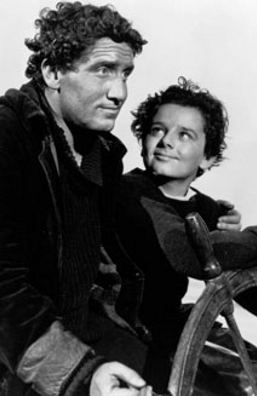
Spencer Tracy and Freddie Bartholomew
in Captains Courageous (1937) 
Tracy, who left us 49 years ago today, also won two Oscars for, respectively, Captains Courageous (1937) and Boys Town (1938). As did Coop for Sergeant York (1941) and High Noon (1952), along with an honorary Oscar for his entire body of work.  He was such a legend that, shortly before his death 55 years ago this May, President John F. Kennedy spent a day trying to get through, as he competed with the likes of Queen Elizabeth II, Audrey Hepburn and Ernest Hemingway, calling to say their goodbyes.

Duke, for his part, won an Oscar for True Grit (1969), which premiered 10 years to the day before his death on June 11, 1979. Like Denzel, he also received the Cecil B. DeMille Award. 

Of course, Hanks’ oversight was, no doubt, inadvertent—no disrespect intended—even though he failed even to mention Tracy, considered by his peers to be the greatest actor Hollywood had ever seen. In addition to his wins, he garnered seven more Best Actor nominations including, posthumously, for Guess Who’s Coming to Dinner (1967).  

The trio, like so many stars in the silver screen’s firmament, deserves respect.

John Wayne in Wake of the Red Witch trailer.jpg
John Wayne in Wake of the Red Witch (1948)
For their art—the raison d’être of the Academy of Motion Picture Arts and Sciences.  (Sure, Louis B. Mayer had convened industry insiders in January 1927 in his effort to stem labor disputes. But, Mary Pickford and others envisioned a body that would enshrine film as the art, which, in its finest form, it surely is.)

Then there are the living legends which, not two weeks after Hanks’ Golden Globe oversight, were disenfranchised by the Academy as part of its misguided effort to redress, by ‘widening its nets,’ the Academy’s collective failure this year to nominate any African American stars for an Oscar. (Though many like George Clooney rightly note the problem lies with the pipeline.) If these members are inactive for 10 years and do not meet certain criteria, their status will be changed to “emeritus” with all the privileges of Academy membership—except Oscar voting.    

Not so fast, says Academy member Mother Dolores Hart, known for Wild Is the Wind (1957), King Creole (1958) and Oscar-nominated God Is The Bigger Elvis (2012). These older members, she said, are the “wisdom figures.” And, when the Academy loses them it “is going to destroy something of the essence of how people look at” it and “the quality” with which they associate it.  “It’s always been the star in the sky” among all the guilds. “And, I think they are going to lose that.” 

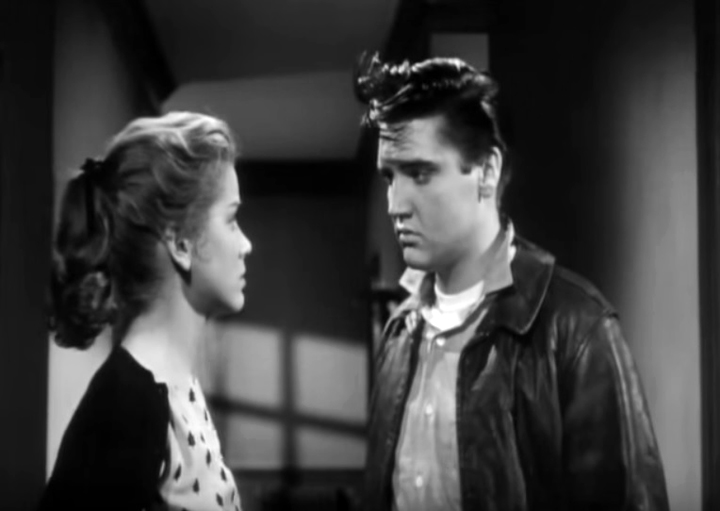
King Creole 1958 (Elvis Presley and Dolores Hart).JPG
 Elvis Presley and Dolores Hart in King Creole (1958)
Not all of the lifetime members will be disenfranchised, and irrespective of their status, some like Oscar-winner Olivia de Havilland, known for Gone with the Wind (1939) and The Heiress (1949), do not choose to vote. But, many will lose voting status. This “hurts” said Mother Dolores, not only for herself but for the sake of her academy friends, who, she said, are “precious and have such value.”

Mother Dolores was brought out of retirement in 1998 by Oscar-winner Karl Malden, then president of the Academy. In 1963, at the end of the Come Fly with Me press junket, her limousine’s final destination was the Abbey of Regina Laudis in Bethlehem, Connecticut, where she has lived in consecrated life for 53 years. “We want to hear what you say and what you experience, because you have experienced it from a different place,” she said Malden told her when he called.

“I think they should rethink this,” said Mother Dolores, “and see if there’s something else they can offer.”

Surely, they will come up with a solution that keeps the Academy, like the “immortals” of the “firmament,” glistening.

Mary Claire Kendall is the author of Oasis: Conversion Stories of Hollywood Legends, which includes chapters on Gary Cooper and John Wayne and discusses Spencer Tracy in the overview chapter, which includes a never-before-published photo with his disabled son, John, c. 1927.

Tuesday, June 7, 2016

Oasis in Boston -- Barnes & Noble Prudential Center

Sunday's book signing at the Barnes & Noble Boston Prudential Center was a wonderful opportunity to meet folks from all walks of life and parts of the country, if not the world.  Everyone who bought a copy of Oasis: Conversion Stories of Hollywood Legends had a special story and reason for buying it.  Thank you Barnes & Noble Boston Prudential for hosting me!  A terrific event.  And, to all who read this post, please don't forget to "like" the Barnes & Noble Facebook page!


Afterwards, a friend and I stopped by the original Cheers to exhale a la Norm, Frasier, Cliff & co...


On Friday, June 3, in advance of Sunday's event, per below tweet: 


Monday, May 23, 2016

Oasis in Towson; upcoming in Boston

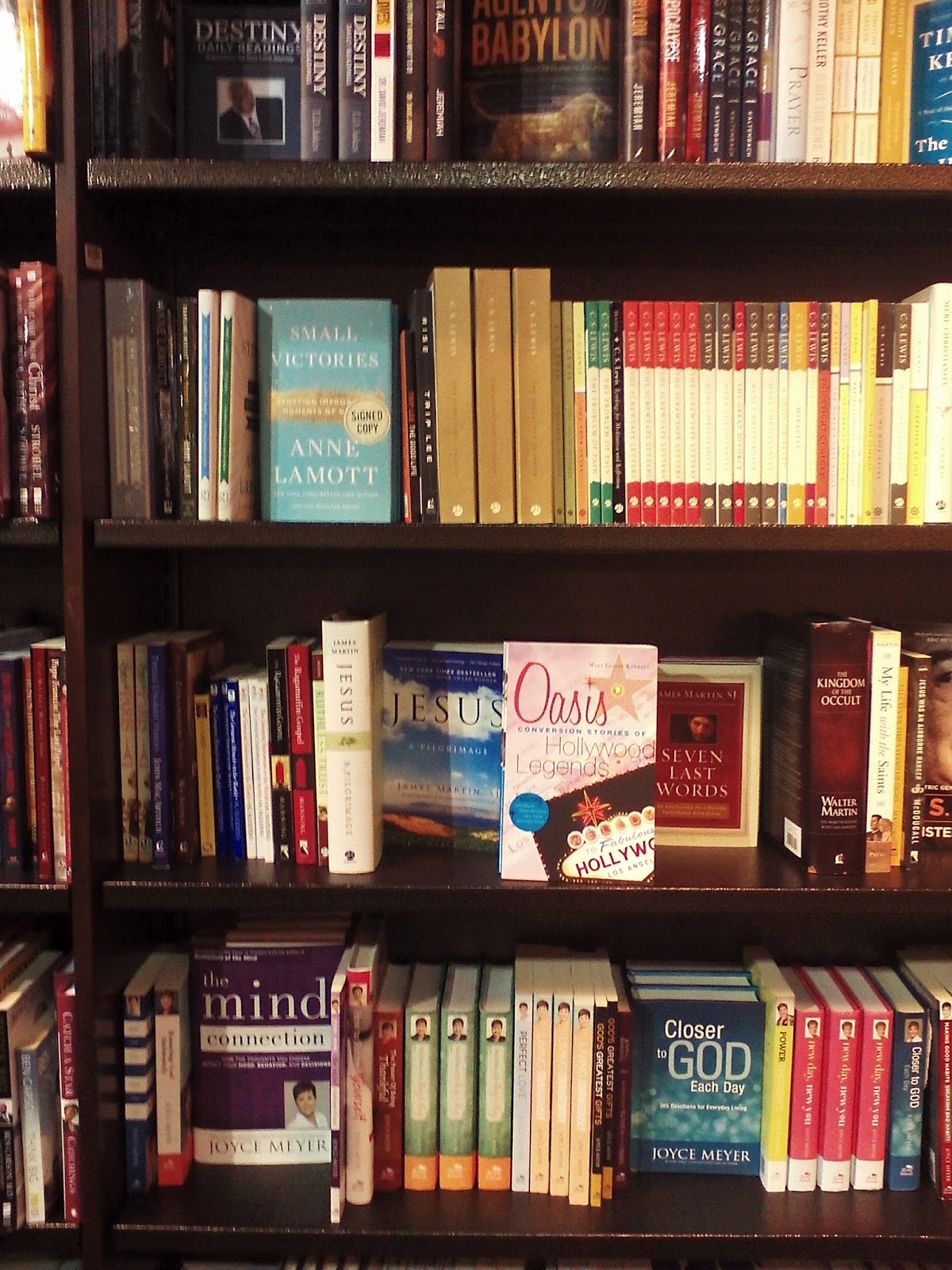
My father and I enjoyed visiting with patrons of the Barnes & Noble in Towson, Maryland on Saturday, May 21, 1-3 PM. I was there to sign copies of my book, Oasis: Conversion Stories of Hollywood Legends, and in the process we had some interesting conversations and made some new friends... and sold a dozen books... more will be sold in coming days, given display in store and on social media, e.g., Instagram... all in all a rewarding and fun experience... NEXT UP: Boston on Sunday, June 5, 3 PM, at the Barnes & Noble Prudential Center. Here's the official notice as well as Facebook post.  Also, I will be appearing on Boston Herald Drive on Friday, June 3 at 6:45 AM talking about book series and plugging event.

Oasis, a great summer read, matches Barnes & Noble summer tote, shown in background!

My father and I took turns taking photos, while we were waiting for customers... next time, we'll have to bring our photographer along!

My 90 year old father... 

... and I waiting patiently for more customers to stop by...  


... and below, a photo posted on Instagram by Barnes & Noble Towson...


Tuesday, April 19, 2016

Oasis in Maryland -- Baltimore, Rockville... upcoming in Towson!

And, now my book tour reaches my home state of Maryland... at the Barnes & Noble in Rockville, not far from where F. Scott Fitzgerald is buried, on Sunday, April 17, per below photos... at the Power Plant Barnes & Noble on the Baltimore waterfront on Thursday, February 25, per next set of photos... and UPCOMING on Saturday, May 21, 1-3 PM, at the Barnes & Noble in Towson, Maryland, where I will be signing copies of Oasis: Conversion Stories of Hollywood Legends for the public, per below flyer...


And, my visit to Baltimore...


And, upcoming...

Meet the Author
Oasis: Conversion Stories of Hollywood Legends
Saturday, May 21, 1:00-3:00 PM
Barnes & Noble in Towson Circle
1 E Joppa Road, #100, Towson, MD 21286


Author signing "Oasis" at the Burbank
Barnes & Noble on July 15, 2015
In Oasis: Conversion Stories of Hollywood Legends, Mary Claire Kendall writes about an “all-star twelve” from film’s “Golden Age,” including Alfred Hitchcock, Gary Cooper, Bob Hope, Mary Astor, John Wayne, Ann Sothern, Jane Wyman, Susan Hayward, Lana Turner, Betty Hutton, Ann Miller and Patricia Neal. The book uncovers stories of recovery and conversion, with intimate portraits of these all-too-human movie stars. 


Mary Claire Kendall is a Washington-based writer. Among other projects, she is currently working on Oasis II; a book about Hemingway; and a TV show featuring never-before-told stories about some of Hollywood’s biggest stars. She has done numerous radio and TV interviews about “Oasis” including “Morning Answer” on Salem News Network and Boston Herald Drive.”  She was a regular columnist in Forbes (2012-2013) and Breitbart (2014) and has also been published in The Chicago Tribune, Chicago Sun-Times, New York Daily News, New York Post, The Weekly Standard, Washington Times, Daily Caller, Townhall, FoxNews.com, The American Spectator, Catholic New World and National Catholic Register, among other venues.


For more information, see www.maryclairecinema.com.