Tuesday, April 19, 2016

Oasis in Maryland -- Baltimore, Rockville... upcoming in Towson!

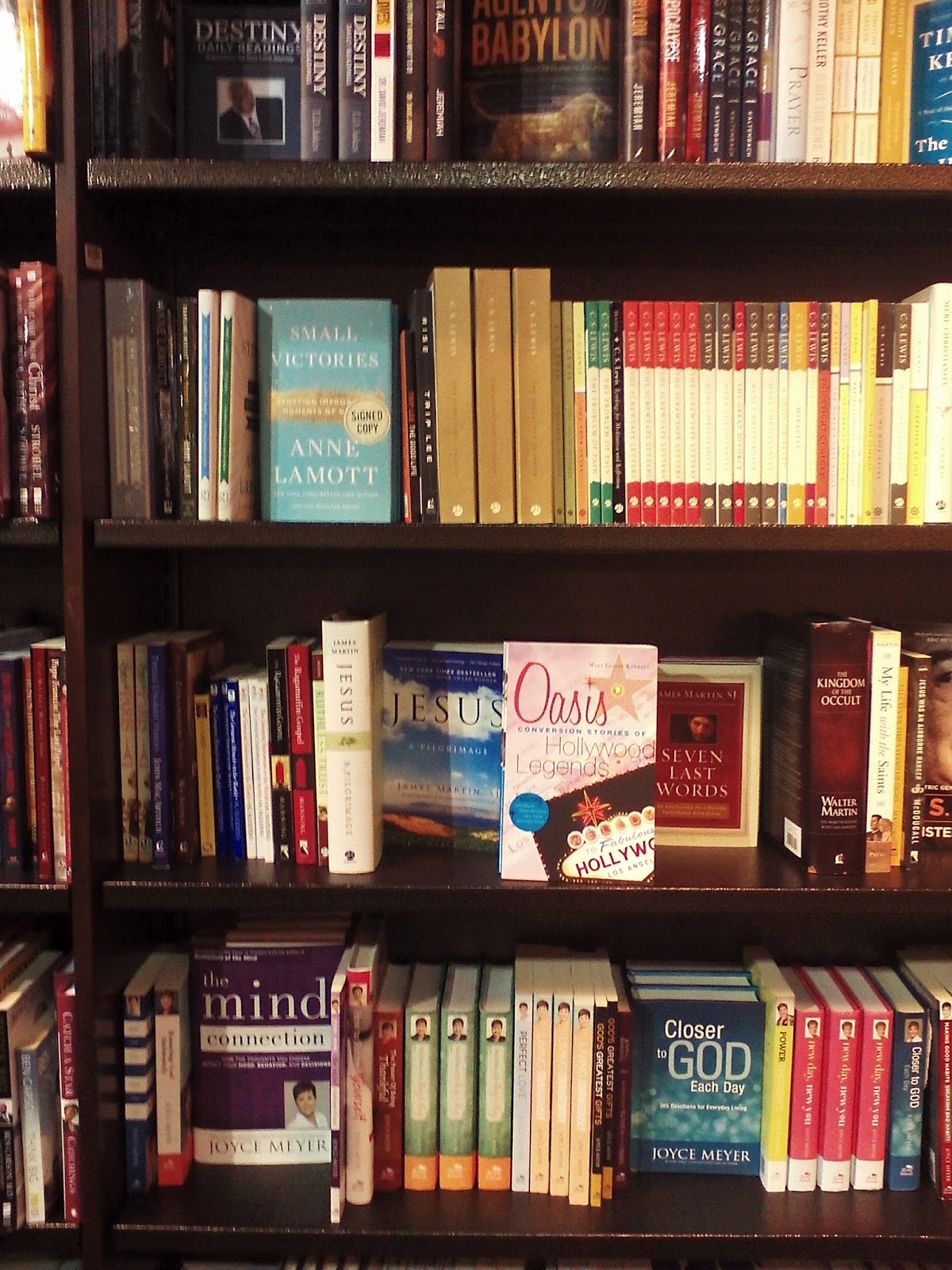
And, now my book tour reaches my home state of Maryland... at the Barnes & Noble in Rockville, not far from where F. Scott Fitzgerald is buried, on Sunday, April 17, per below photos... at the Power Plant Barnes & Noble on the Baltimore waterfront on Thursday, February 25, per next set of photos... and UPCOMING on Saturday, May 21, 1-3 PM, at the Barnes & Noble in Towson, Maryland, where I will be signing copies of Oasis: Conversion Stories of Hollywood Legends for the public, per below flyer...


And, my visit to Baltimore...


And, upcoming...

Meet the Author
Oasis: Conversion Stories of Hollywood Legends
Saturday, May 21, 1:00-3:00 PM
Barnes & Noble in Towson Circle
1 E Joppa Road, #100, Towson, MD 21286


Author signing "Oasis" at the Burbank
Barnes & Noble on July 15, 2015
In Oasis: Conversion Stories of Hollywood Legends, Mary Claire Kendall writes about an “all-star twelve” from film’s “Golden Age,” including Alfred Hitchcock, Gary Cooper, Bob Hope, Mary Astor, John Wayne, Ann Sothern, Jane Wyman, Susan Hayward, Lana Turner, Betty Hutton, Ann Miller and Patricia Neal. The book uncovers stories of recovery and conversion, with intimate portraits of these all-too-human movie stars. 


Mary Claire Kendall is a Washington-based writer. Among other projects, she is currently working on Oasis II; a book about Hemingway; and a TV show featuring never-before-told stories about some of Hollywood’s biggest stars. She has done numerous radio and TV interviews about “Oasis” including “Morning Answer” on Salem News Network and Boston Herald Drive.”  She was a regular columnist in Forbes (2012-2013) and Breitbart (2014) and has also been published in The Chicago Tribune, Chicago Sun-Times, New York Daily News, New York Post, The Weekly Standard, Washington Times, Daily Caller, Townhall, FoxNews.com, The American Spectator, Catholic New World and National Catholic Register, among other venues.


For more information, see www.maryclairecinema.com.


Tuesday, April 5, 2016

Spencer Tracy and His Son John

Spencer Tracy and his son John c. 1928 Credit: The John Tracy Collection 


By Mary Claire Kendall

It is said—our strength is our weakness. In the case of Spencer Tracy and his son John Ten Broeck Tracy, who died in Acton, California on June 15, 2007—five days after the 40th anniversary of his father’s death—nothing could be truer.
“Spence was considered by many to be the greatest actor the screen had ever seen,” his good friend, 82-year Paramount veteran, A.C. Lyles told me.*
Yet, the painful emotion he felt upon learning, in 1925, that his baby son, John, was deaf was the hardest of blows. The only thing Spencer Tracy was not good at, he candidly admitted, was “life.”
His son John, on the other hand—dealt a whole series of setbacks, in what, at age 22, he would term “My Complicated Life” in an article he wrote for The Volta Review—was great at life.
If only Spencer Tracy could have read the script, he would have discovered John would soon hear the voice of God a little more loudly; see with the eyes of faith a little more clearly; and grow a big heart, drenched with hope and optimism.
As John’s daughter-in-law Cyndi Tracy said, “He just always had an uncanny ability to accept God’s love and always knew (his suffering) was going to be for a greater good.” It was never “Why me?” or “Poor me.”
God, he felt certain, had a plan.

The Plan’s Unfolding
When Louise Treadwell met Spencer Tracy, her theatrical star was rising. Spencer, four years her junior, was just starting out.
It was early 1923. They were both arriving in Grand Rapids, Michigan to play in the same stock company. As fate would have it, they alighted the train station platform simultaneously.
The attraction between these two polar opposites, descended from, respectively, English blue bloods and working-class Irishmen, was immediate. Six weeks later, in between the matinee and evening shows in Cincinnati, Ohio, they got married. Nine months and two weeks hence, on June 26, 1924, in Spencer’s hometown of Milwaukee, their little bundle of joy arrived.
Turning Point
One day, while John lay napping, the screen door accidentally slammed behind Louise and he kept peacefully slumbering on. She immediately—instinctively—knew he was deaf. The diagnosis came back as nerve damage of unknown origin. Unbeknownst to them, he had what is known as Usher syndrome, which also causes gradual blindness due to Retinitis Pigmentosa—starting at birth.
The doctors said the Tracy’s best option was to place John in an institution for retarded children at age six. The Tracys would hear none of that and promptly went to work—talking to him, reading him nursery rhymes, playing games with him… loving him.
“Spence,” said Lyles, “was absolutely marvelous with him;” but “gave all credit to (Louise)” for John’s progress.
Early on she “kept repeating the word ‘talk’… a hundred… sometimes three hundred times” in twice or thrice daily “exercises.” One day, said Lyles, when she finished, John, then 3 or 4, leaned his head close to hers and said, “talk”—his very first word.
Tragedy again visited when John contracted polio at age six, leaving him with a withered right leg. That same year, Lyles recounted, Louise “gave up her career to devote herself entirely to her son and studied everything she could get her hands on about (educating deaf children).” No institution existed at the time that worked with parents of deaf children to teach them how to help their children develop a bridge to the speaking, hearing world.
Silver Lining
John’s travails motivated Spencer to work much harder so he could give his son all the financial help he needed to overcome his disability. The irony is, it is John’s very disability that provided the impetus for Spencer to overcome what his good friend and fellow actor Lynne Overman said was a tendency toward laziness, thereby becoming the acting legend he was.
The father-son bond was stronger than ever and was set for life.

John learned how to lip-read perfectly and to speak, read and write and was fully functioning by age 11, when he began to write his daily journals. Three years later, he started “publishing” his “Newsy News” for friends and family.
When John was 17, Louise first spoke publicly, in her lovely English-accented tones, about raising and educating a deaf child. Her speech at the University of Southern California led her, a year later, in 1942, to found, in a campus bungalow, with Spencer’s money, the John Tracy Clinic.  It became the only such entity worldwide to provide service, free of charge, to parents of infants and preschool children born with hearing losses.
Walt Disney, with whom the family played polo at the Will Rogers Ranch and The Riviera Polo Club, was one of the original board members.
In 1975, poignancy overflowing, Louise was the first recipient of the Father Flanagan Award for her special service to youth; and, around the same time, she helped establish the Boys Town National Research Hospital for Usher Syndrome: Boys Town, saved from bankruptcy and oblivion by Spencer Tracy’s Oscar-winning performance as Father Flanagan, was now rescuing those who suffer John’s same sensory afflictions.
“Our Everyday Blessing”
John Tracy circa 2005

John was always intent, as his son and fellow artist, Joseph Spencer Tracy, characterized it, on living “each day to the fullest, regardless” of his daily challenges.
“I’m an artist, writer, photographer; I played polo, tennis; swim, water-ski, dance,” he wrote in his journal in 1975.” I got married, had a family. I’m also profoundly deaf, going blind, had polio. What can you do?”
Well, apparently everything!
Endowed with a high IQ and an athlete’s body, he energetically poured himself into life, blissfully unaware of his multiple disabilities until he was in his twenties.
He loved horses, which mirrored his own “gentle” spirit, and the invigorating sense of freedom riding gave him: It reminded him of his “favorite” times of life at the family ranch in Encino (1936-1955), so full of fond memories like the day he started playing polo at age 12. (He had only begun riding three years earlier.) That day, one of the players was injured and Spencer summoned him to ‘come on down!’
Through it all, he had, Cyndi said, a “tremendous sense of humor” and the “charm of an angel.” Fittingly, he did a dead-on impersonation of his father, which no professional comedian has ever achieved.

John graduated from Pasadena City College then attended Chouinard Art Institute, graduating in 1955, the same year his son was born. He subsequently worked at Walt Disney Studios in the props department for nearly five years, until his eyesight started failing. But, he continued doing his watercolor paintings and pen and ink and pencil drawings, as he was able to.  He was declared legally blind in the early eighties and, by 1994, was totally blind.
“The moment you met him,” Cyndi said, “your life was changed. You knew that you were in the company of someone great, who was, at the same time, the most humble person you would ever meet.” Quite simply, he had no idea how positively he impacted others’ lives.
“Pa Pa Johnny,” Cyndi said, “was truly ‘our everyday blessing.’”
John attended Sunday services at All Saints Episcopal Church in Beverly Hills for decades with his mother, who died in 1983. He would also pray nightly in an elaborate ritual that, Cyndi said, revealed his “darling personality.” The family—Joe’s family, sister Susie, the cousins, among others—“was lined up in the same order every night.” But “all his friends and acquaintances were always jockeying for position.”
“He was strong until the end,” said Joe, and “always prayed for other people, didn’t pray for himself”—a lesson in selflessness he communicated to his three grandchildren.
As for actually communicating with words, John could talk, but his deafness combined with his blindness required some special techniques for his family to reply back.
Cyndi described how he loved to converse and remembered with particular warmth those special times, often at the end of a long day, that she would be perched next to him as he would regale her with fascinating stories. She would reply by spelling words on his back. Or, for shorter responses, she would spell words on his hand—a hand that so often held her hand, while tapping her other hand, as he said, “God bless you, Cyndi. Thank you. ”
For, whatever else he was, John Tracy was always profoundly grateful for all life’s blessings.

Mary Claire Kendall, a Washington-based writer, is author of Oasis: Conversion Stories of Hollywood Legends featuring, in the overview chapter, Spencer Tracy, including a never-before published photo of him and his son John c. 1927, among other legends. 

********************
*Originally published in DBI Review, Number 45, January-June 2010. Republished in Forbes on June 25, 2012.

Sunday, April 3, 2016

Easter Parade: A star’s tragedy and triumph

Publicity photo of Ann Miller
for Easter Parade (1948)
Credit: Wikimedia Commons
This Easter Sunday*, as we celebrate with full-throated “Hallelujahs!” our precious Savior’s glorious triumph over death, many of us will also mark the joyous occasion by watching Easter Parade (1948), starring Fred Astaire, Judy Garland, Peter Lawford and Ann Miller.

For many it’s an Easter tradition.

But, what few know is that, while Miller beams as she dances her way through this Easter classic, just before filming, she lost her unborn child and nearly died, herself, at the hands of an abusive husband. She was still suffering the after-effects of this tragedy during filming, about which I write in Oasis: Conversion Stories of Hollywood Legends, along with the rest of Ann’s story.

Miller had had success in Hollywood initially, landing a key role in the Oscar-winning You Can’t Take It With You (1938) at age 15. Albeit, she rose the hard way.  As she wrote, “I became a Hollywood star on my talent, not on casting couches. If I had gone that route, I could have been a bigger star. That’s the name of the game in Filmlandia.”

But, while she avoided such pitfalls in her professional life, in her personal life, she was not so discriminating. When she was just 21, she began dating a wealthy oilman and steel heir, Reese Milner, whom she met through friends at the Mocambo nightclub. Milner was a tragic choice. Rare in the annals of Hollywood, Ann was a virgin at the time of her marriage, which lasted just one year, February 16, 1946 to January 22, 1947.

After marrying the Texas charmer, she soon became pregnant. One night in a drunken rage, Milner kicked his wife, now eight-months’ pregnant, down the stairs, causing her to go into premature labor. Ann gave birth to a baby girl, Mary Milner, on November 12, 1946, now buried, alongside her mother, at Holy Cross Cemetery in Culver City, California.

While still healing from broken ribs sustained in the fall, Miller landed her starring role in Easter Parade after Cyd Charisse bowed out. It was a painful but rewarding experience—Darvon pills getting her through the dance numbers, while her rib cage was taped up.

Afterwards, Ann signed with MGM, making several more musicals including On the Town (1949) and Kiss Me, Kate (1953), but continued to make tragic choices in men. Through it all she found Jesus and shortly before she died was baptized into the Catholic Church.


Mary Claire Kendall, a Washington-based writer, is author of Oasis: Conversion Stories of Hollywood Legends featuring John Wayne and Susan Hayward, among other legends. 

* This piece was originally published on March 27, 2016 in The American Catholic blog, a week before the Divine Mercy Sunday feast we celebrate today.

Thursday, March 31, 2016

Oasis in Upstate New York & Northwest Pennsylvania


Lovely trip to Upstate New York and my father's childhood home over the Easter holiday. Along the way, we dropped by the Barnes & Noble in Elmira where I signed copies of my book Oasis: Conversion Stories of Hollywood Legends. It's been selling nicely there!


Then, on the way home, we had a great visit at the Barnes & Noble in Wilkes Barre, Pennsylvania where I signed more copies of Oasis for two hours for several customers and for stock on the shelf... 


All in all a great visit up north including, among other relaxing features, time spent in Watkins Glen on Holy Saturday, where we stopped by Lakewood Vineyards and tasted, and later bought, some of their delicious wine... afterwards, we drove down to the Seneca Lake waterfront, shown below... my father said he had not appreciated as a child just how blue and beautiful it was!


Wednesday, February 24, 2016

Great Moments in Oscar History: McDaniel, Chaplin, Hayward & Wayne

 By Mary Claire Kendall


As we get ready for tonight’s Academy Awards being held tonight at the Dolby Theater in Hollywood, our minds naturally go to great moments in Oscar history.

One such moment, which always leaps to mind—and especially tonight, given the #oscarssowhite controversy—occurred at the 12th Academy Awards on February 29, 1940.  Held at The Ambassador Hotel in its segregated Cocoanut Grove and hosted by Bob Hope, poignancy overflowed when Hattie McDaniel won the Oscar for Best Supporting Actress for her role as “Mammy” in Gone with the Wind (1939). 

“… This is one of the happiest moments of my life,” McDaniel said in accepting her Oscar. “And, I want to thank each one of you who had a part in selecting me… for your kindness, it has made me feel very, very humble. And, I shall always hold it as a beacon for anything that I may be able to do in the future. I sincerely hope I shall always be a credit to my race and to the motion picture industry. My heart is too full to tell you just how I feel...” As she finished, saying “Thank you and God bless you,” she was gripped with emotion.  

Thirty-two years later, on April 10, 1972, another wrong was righted when the Academy honored Charlie Chaplin with “a special Oscar” some 20 years after his banishment from the United States. “I do not want to create any revolution, all I want to do is create a few more films,” Chaplin said at the time. But, he was forgiving and had an equally simple message on this occasion: “Oh you thank you so much. An emotional moment for me. And, words seem so futile, so feeble. I can only say. Thank you for the honor of inviting me here. And, oh, you’re wonderful, sweet people. Thank you,” he said. 

A similarly dramatic moment occurred at the 46th Academy Awards, two years later, when Susan Hayward, who fifteen years earlier had won the Best Actress Oscar for I Want to Live (1958), presented the same award to Glenda Jackson for A Touch of Class (1973). Hayward had been rated on par with Sarah Bernhardt. This night was no exception. Only she was not fighting discrimination but illness. 

A year earlier she had been diagnosed with multiple brain tumors, and began losing weight and gradually suffered paralysis.  As if that was not bad enough, she was also suffering from lung cancer.

On April 2, 1974, as she arrived at the Dorothy Chandler Pavilion, she was a class act from start to finish, making her grand entrance in her signature sable mink fur. Wearing a Nolan Miller green chiffon gown, graced with Van Cleef diamond necklace, bracelet and earrings, Charleton Heston led her to the podium, as she gripped his strong arm. (The doctor had injected her with Dilantin before she went on stage to avert seizures.) She was such a hit, the Academy invited her again in 1975.  But, as she confided to Miller, this was her last rodeo. Less than a year later on March 14, 1975, she died, gripping the black onyx crucifix Pope John XXIII had given her.

Then there was John “Duke” Wayne’s dramatic last appearance at the Academy Awards on April 9, 1979, when he, too, was ailing.

“Thank you Ladies and Gentleman,” he said. “That’s just about the only medicine a fellow would every really need. Let me tell you, I’m mighty pleased that I can amble down here every night. Well, Oscar and I have something in common. Oscar first came to the Hollywood scene in 1928. So did I. We’re both a little weather-beaten but we’re still here and plan to be around for a whole lot longer.” 

Two months later, Duke “bought the farm” and went to his eternal reward, joining Hayward, his co-star on The Conqueror, among films the two made together. Like Hayward, he had also found healing in faith. Ironically, the two had also developed fatal cancer, as with many involved in Howard Hughes’ aforementioned film in the mid-1950s, including also Dick Powell (director) and Agnes Moorehead, likely due to downwind radiation from nuclear weapons testing in Nevada. 

In the end, the spiritual gold Hayward and Duke were anticipating was worth the most. As Hattie McDaniel always said, “I did my best and let God do the rest.”  May that spirit infuse tonight’s Oscars and the great work of McDaniel’s fellow actors of all creeds and colors today and always.

Mary Claire Kendall, a Washington-based writer, is author of Oasis: Conversion Stories of Hollywood Legends featuring John Wayne and Susan Hayward, among other legends.

This piece was originally published in Townhall.com .
  

Tuesday, February 23, 2016

Wanting for Oscar, not Spiritual Gold

By Mary Claire Kendall

“Crowd lining street under the marquee of the Pantages Theater at the 31st Academy Awards in 1959” 
Credit: Wikimedia Commons

The Oscars have not always looked favorably upon Hollywood’s most celebrated stars.

Bob Hope, legendary comedian, television personality, and film star, hosted the Academy of Motion Picture Arts and Sciences awards ceremony a record 19 times, but never won, nor was he nominated for, a competitive “Oscar.” Each year he told signature jokes about this artistic hole in his life, at the Oscars, “or as it’s known at my house: Passover,” he famously quipped.

He did, however, win five special Oscars, including the Jean Hersholt Humanitarian Award at the 32nd Academy Awards in 1960 for his charitable work. 

An Oscar for film achievement is, of course, the most coveted. Indeed, the year Hope won his humanitarian award, Ben-Hur (1959) won 11 Oscars, including Best Director (William Wyler), beating out Gigi (1958), which, the year prior, won 9—both exemplifying the towering achievement Oscar recognizes.  But, sometimes, for reasons largely unknown, an artist of undeniable talent, fails to secure this golden recognition from his or her peers.

Ann Sothern, a legendary comedienne, featured in Oasis: Conversion Stories of Hollywood Legends, along with Hope, Hitchcock, Lana Turner and others, got her big break in A Letter for Three Wives (1949). Though the film won two Oscars, Sothern was not even nominated. Afterwards, her prospects, along with the Hollywood studio system, faded. But, as her career spiraled downward, fueled by illness, she looked upward to God and found solace and strength. Finally, after much suffering, she garnered a Best Supporting Actor Oscar nomination for her starring role, alongside Lillian Gish and Bette Davis, in The Whales of August   (1987). Turner, too, received a Best Actress Oscar nod—for Peyton Place (1957)—but, like Sothern, went home empty-handed. Later, also like Sothern, she found healing in God.

But, perhaps the most stunning of Oscar passovers is Alfred Hitchcock. Known for Psycho (1960), Vertigo (1958), Rear Window (1954), among other classics, the legendary director was nominated for five Oscars, and though his films, such as Rebecca (1940), won Oscars, he, himself, never won a directorial Oscar.

Hitch did finally win the non-competitive Irving G. Thalberg Memorial Award in 1961.  Then, twenty years later, he won, as with Hope and the others in Oasis, the ultimate prize when he recognized God as the director of his life and embraced the healing power of His grace, winning, that all-important spiritual gold.

Mary Claire Kendall, a Washington-based writer, is author of Oasis: Conversion Stories of Hollywood Legends

Originally published in American Catholic Blog

Monday, February 22, 2016

Casting for Oscar Gold

By Mary Claire Kendall
Vivien Leigh in Gone with the Wind 
One of the more interesting Hollywood stories is how an actor or actress ends up playing an Oscar-winning role.

The unending stories of how the bosses went about casting Scarlett O’Hara in the film version of Gone with the Wind (1939) are, of course, legendary. Thirty-two actresses auditioned to play Scarlett, including Tallulah Bankhead and Paulette Goddard, as well as Lana Turner and Susan Hayward—two of the eight female stars I write about in Oasis: Conversion Stories of Hollywood Legends. Without question, the producers chose right when they picked Vivien Leigh, whose mother, devout Roman Catholic Gertrude Mary Frances Hartley, was praying for her daughter’s success.

God’s hidden mystical power plays an important role in ensuring the right talent is chosen. This is especially clear when the choice is less obvious, as in the case of Lieutenant Colonel Nicholson in The Bridge on the River Kwai (1957).

The producers were flummoxed and, so the stories go, initially wanted Charles Laughton to play the starved, tortured British POW, though his girth disqualified him. Some of the others they apparently considered were James Mason, Ronald Coleman, and Douglas Fairbanks, Jr. But none really captured the imagination.   

Then, Sam Spiegel, who had recently struck Oscar gold with African Queen (1951), approached Alec Guinness, the up-and-coming star who had grabbed Hollywood’s attention in David Lean’s Great Expectations (1946) and Oliver Twist (1948), and, more recently, in The Swan (1955), his Hollywood debut. Lean, who was set to direct, balked, as David Brownlow reports in his biography about the famed director, saying, “I don’t think he will give us the ‘size’ we need.” But Spiegel had a hunch—that divine nudging—and invited Alec to dinner to try and change his mind. “I started out maintaining that I wouldn’t play the role,” Alec said, “and by the end of the evening we were discussing what kind of wig I would wear.” The rest, as they say, is history

Finally, there’s the actor who is made for the role—no questions asked. For one hero, whose life story Hollywood had been badgering him to make since his awe-inspiring heroics in WWI, there was only one actor. The hero was Sergeant York, the actor Gary Cooper. As it so happens, York’s story of faith, compellingly portrayed in Sergeant York (1941), parallels and somewhat inspired Gary Cooper’s own spiritual conversion, about which I also write in Oasis.


Mary Claire Kendall, a Washington-based writer, is author of Oasis: Conversion Stories of Hollywood Legends.

Originally published in American Catholic Blog